
CRM for dropshipping
CRM for dropshipping: from a landing page lead to a collected parcel
A lead from your landing page reaches the CRM in seconds, the dialler hands it to an agent straight away, and waybills and tracking run themselves. Affiliates are paid for parcels that were actually collected, not for dispatches.
- 1
- system instead of spreadsheets, a dialer app and manual reports
- on collection
- affiliate payouts, not on every dispatch
- from $79
- per month for three users
The API accepts leads from any site over a token and queues them for a call immediately.
Partners see statistics for their own traffic and nothing else from your base.
You choose which statuses count towards a payout — and never pay for returns.
An SMS sequence, reminders and automatic statuses for parcels sitting at the branch.
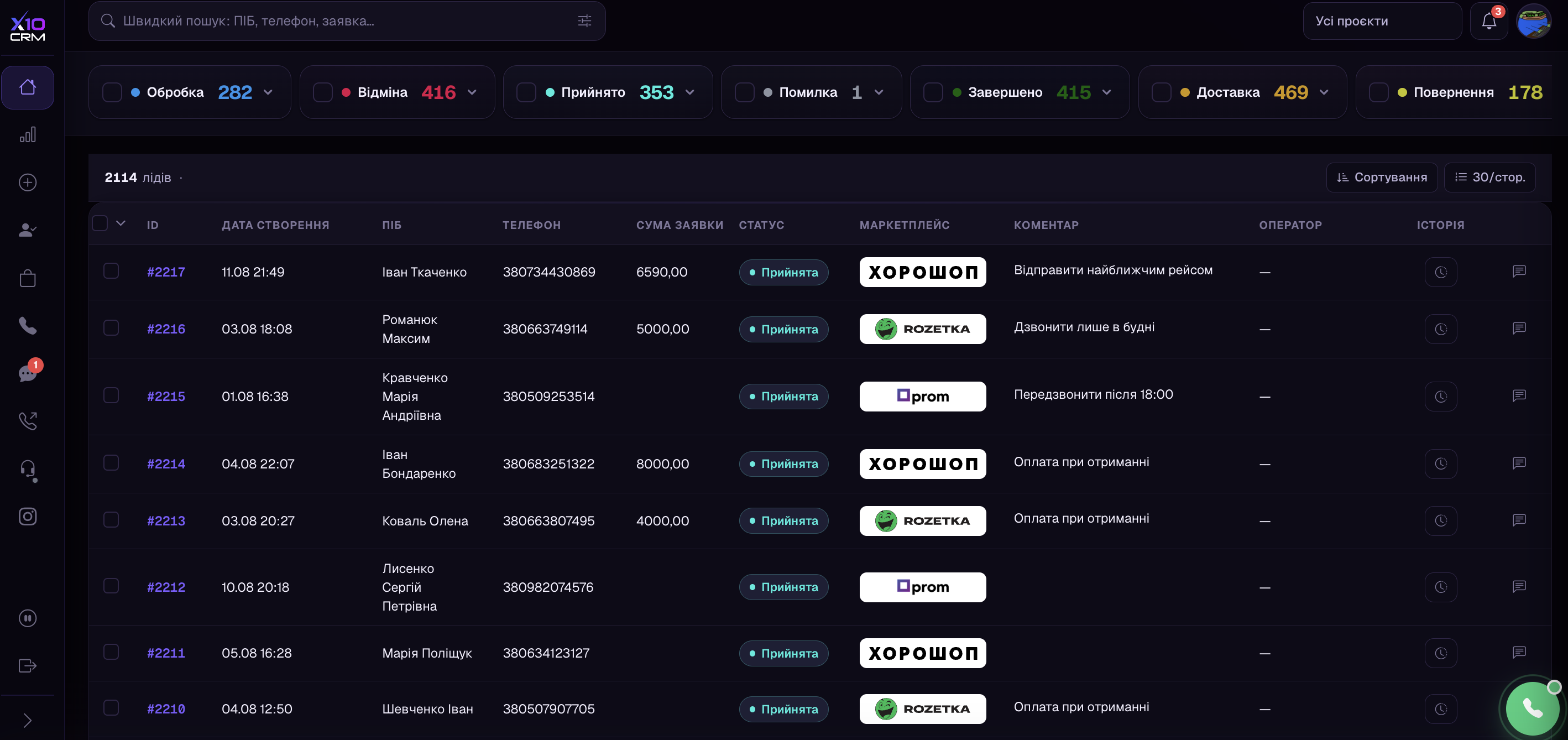
Landing page leads
Leads from every landing page and every affiliate in one list
A lead from any landing page reaches the CRM through the API, whatever the site is built on. It arrives with its source, the product, the total and a place in the call queue — nobody copies anything by hand.
- A separate token per affiliate, so you can see whose traffic brought the lead
- Sources compared by conversion: a thousand leads at 4% is worse than three hundred at 20%
- Two agents never call the same customer — the lead locks to whoever opened it
Fast call-back
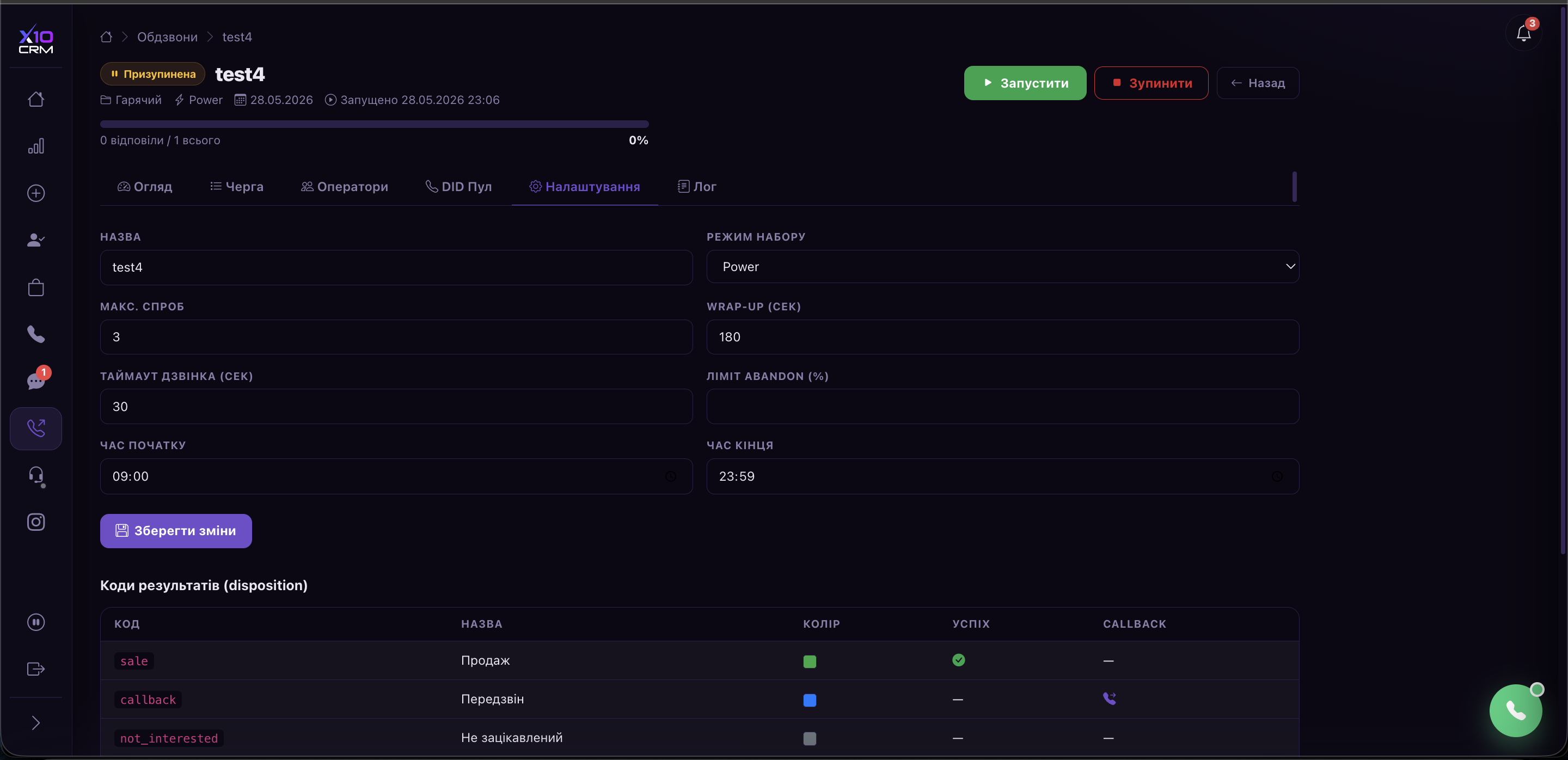
Your agent calls first, while the customer is still warm
In this business a person leaves their number on several landing pages at once, and whoever calls back first makes the sale. The dialler queues new leads by itself and connects a free agent, with the card and the script already on screen.
- Agents never hunt for new leads in a list — the system feeds them
- You can see which landing page the customer came from and what they ordered
- Every call outcome is logged, and the source statistics update immediately
Payout rate
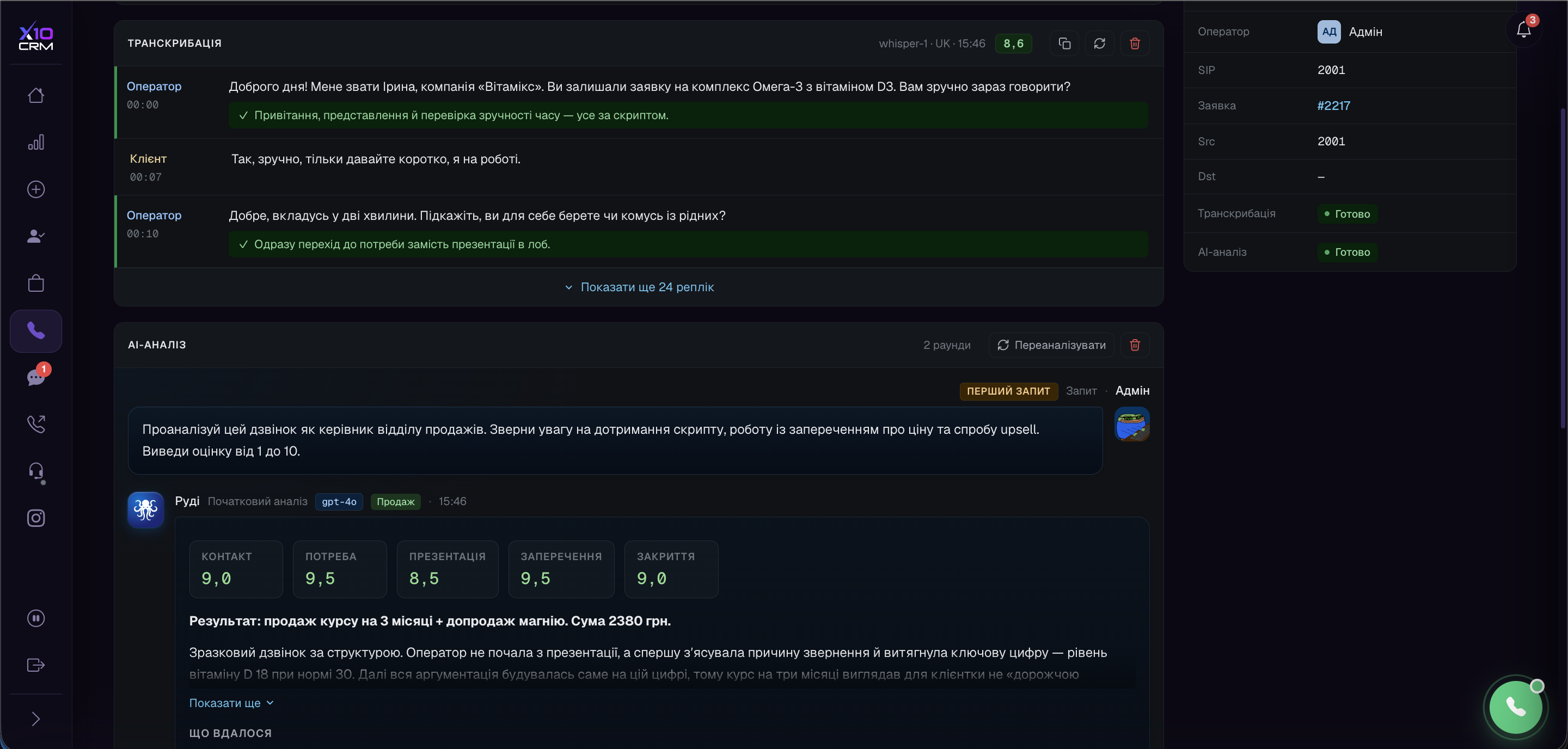
You can see exactly where the payout rate leaks
Sending a parcel is easy; getting it collected is the hard part. Calls are recorded and AI listens to them for you, pointing at the specific conversations where the customer changed their mind. Parcels sitting at a branch land in their own list to be worked.
- An SMS with the waybill number and a reminder to collect the parcel
- Instead of “the agents say something wrong” — specific calls, flagged
- A stuck parcel is not forgotten: the system pulls it into a follow-up filter
Let's work out what uncollected parcels are costing you
Tell us how many leads you get a day and what your payout rate is now — we will show where the money disappears and what the system does about it. Free, and it commits you to nothing.
Delivery and stock
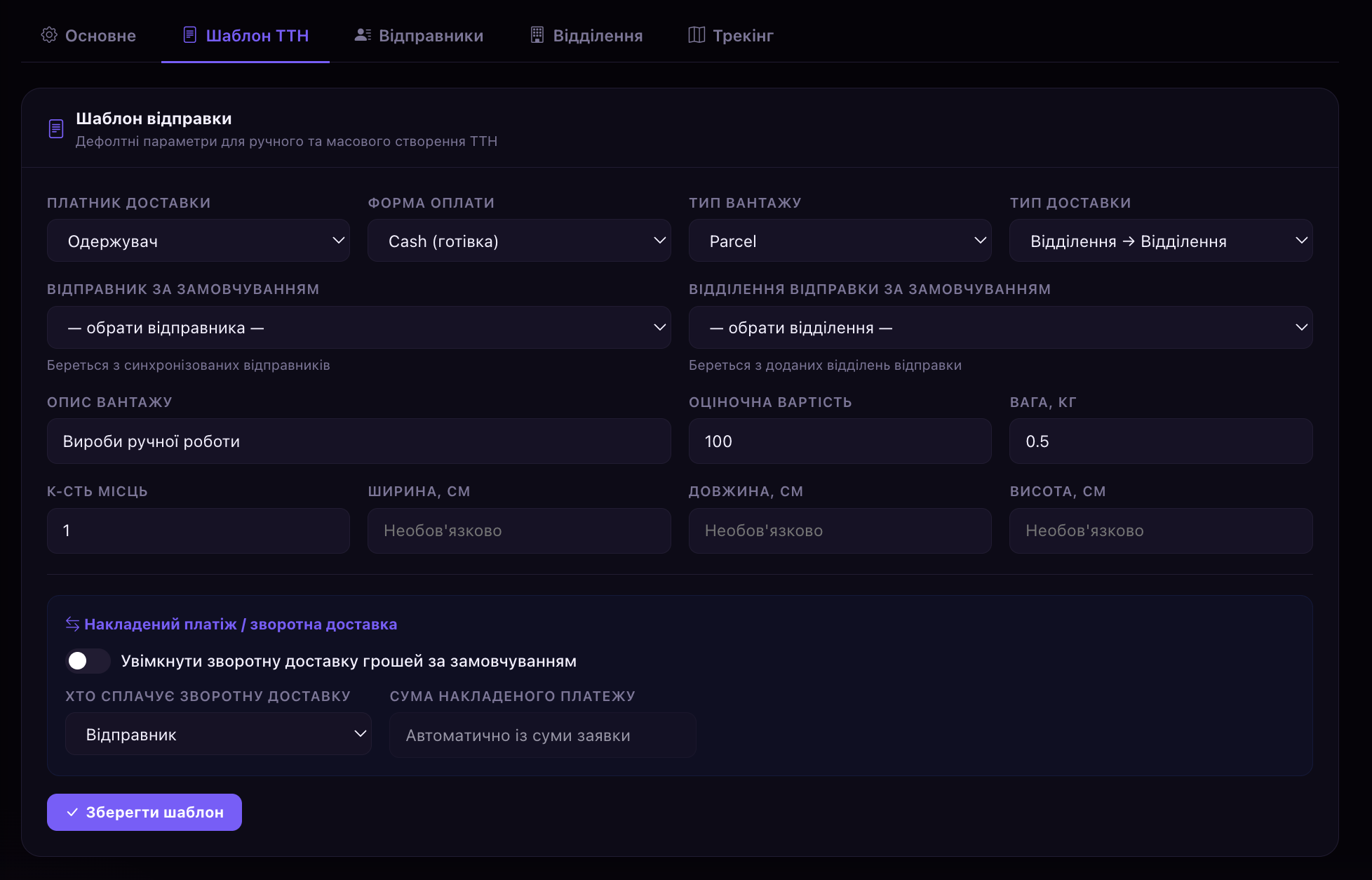
Waybills by the list, and stock that survives heavy returns
Waybills are created from the lead card, and for a whole filtered list at once. Items are written off on dispatch rather than when the order is created, and come back into stock by themselves when a parcel is returned.
- Nova Poshta, Ukrposhta or Meest — the carrier is chosen inside each lead
- The tracking status moves the lead into paid or refused on its own
- Stock stays correct even when the return rate is high
Affiliates and payouts
Payouts are calculated by the system, not by a spreadsheet and trust
The rate per lead and the list of statuses that count towards a payout are set in the system. Partners log into their own cabinet and see statistics for their own traffic only — the rest of your base stays out of reach.
- You pay for parcels that were collected, not for parcels that were sent
- An affiliate cabinet instead of report screenshots in a messenger
- Fewer arguments: every number is counted by the same rules
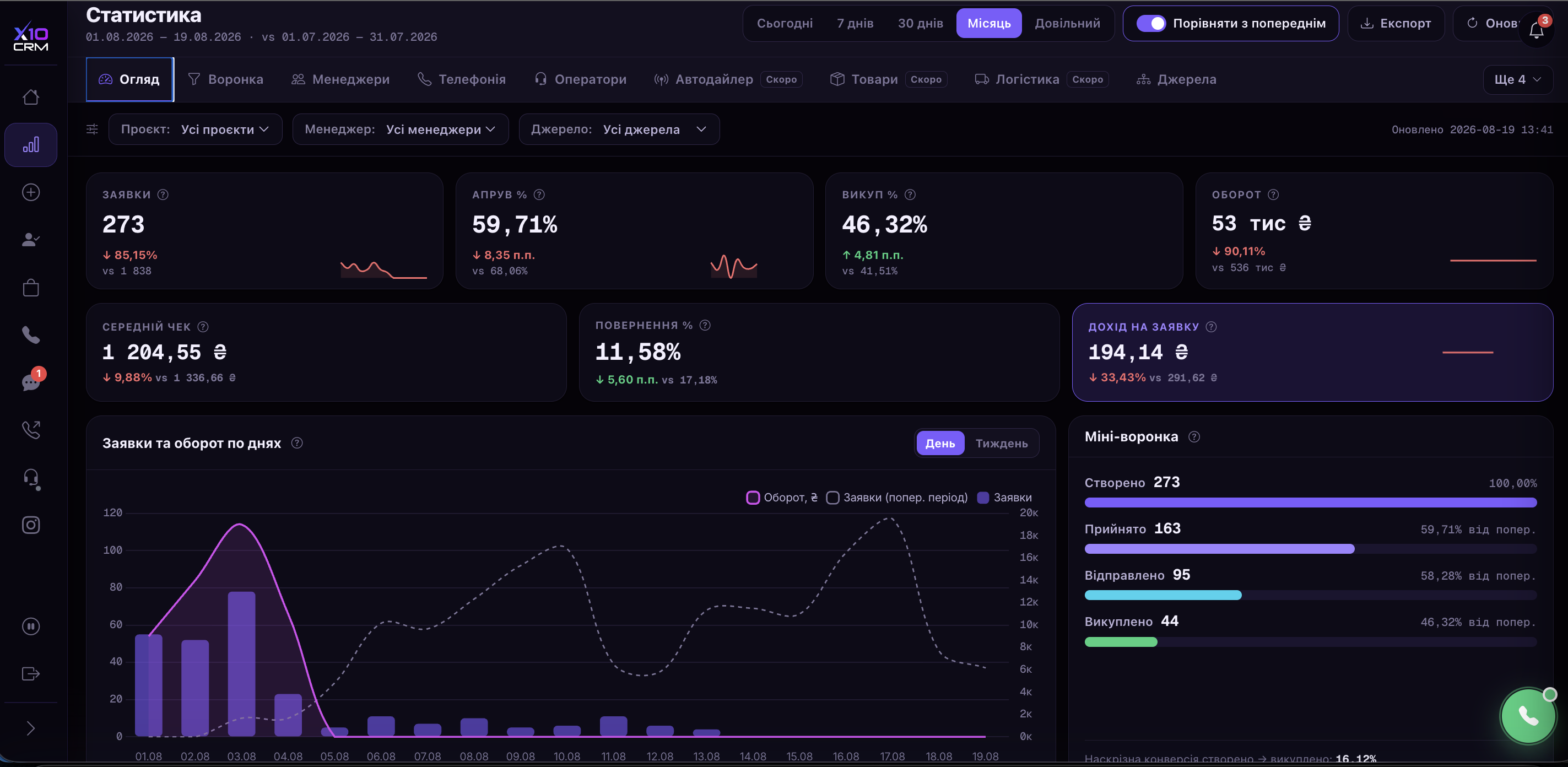
What usually changes after the switch
Examples of what our customers see. The numbers depend on the offer, the traffic sources and the size of the team.
instead of an hour waiting for someone to open the spreadsheet
call quality control, SMS reminders and working the stuck parcels
partners look at their own statistics themselves
a lead locks to the agent who is working it
We will show the CRM on your own offer
The demo takes about half an hour. We connect a test landing page, walk a lead from the API to the waybill and show how affiliate payouts are calculated.
- No slides — the call queue, the lead card and the waybills straight away
- We set up your statuses and your payout rules
- We tell you where to start if you are moving off spreadsheets
More about the CRM for dropshipping
What hurts in affiliate ecommerce
| A familiar situation | What X10 CRM does |
|---|---|
| The landing page lead is seen an hour later; the customer has already bought elsewhere | The API takes the lead instantly and puts it into the dialler queue |
| Half the parcels are never collected and nobody knows why | AI shows the phrase where the agent lost the customer; the SMS sequence closes the rest |
| An affiliate wants statistics, and the only thing you can show is the whole base | A separate cabinet: the partner sees only their own leads and their own conversion |
| Payouts are counted in a spreadsheet, and what counts as a result is always disputed | The rate per lead and the statuses that count towards a payout are set in the system |
| Two agents call the same customer at the same time | The lead is locked to whoever opened it for as long as they are working on it |
| Stock was written off but the parcel came back, and the numbers drifted | A return puts the goods back into stock automatically, driven by the carrier status |
Two numbers decide everything here: how fast the first contact happens and what share of parcels is actually collected. The first decides whether a conversation happens at all, the second whether there was any money. Everything else in the system has to serve them.
#Leads from landing pages and affiliates
A lead from any landing page reaches the CRM through the API over a token, whatever the site is built on. It arrives with its source, a status and a place in the call queue.
- A token per affiliate — you can see whose traffic produced the lead without manual tagging.
- A partner cabinet — a separate page with statistics for their leads only.
- The rate per lead and the statuses that count towards a payout are configured once.
- Source comparison by conversion: a thousand leads at 4% is worse than three hundred at 20%.
The mechanics are documented step by step: creating a webmaster token and connecting a landing page, the webmaster cabinet and payouts and source statistics.
#Speed of first contact
A lead reached in five minutes and a lead reached in an hour are not the same lead. In this market a customer leaves their number on several landing pages at once, so whoever calls first sells.
- 01
The lead arrives over the API
It is created with its source, product and total.
- 02
The dialler picks it up
Agents do not hunt for new leads in a list — the system connects them.
- 03
Card and script on screen
The agent sees which landing page the customer came from and what they ordered.
- 04
A disposition records the outcome
The lead moves through the funnel and the source statistics update immediately.
#Collection: where the money is actually lost
Dispatching a parcel is easy; getting it collected is not. Three things work at once here: the quality of the confirmation call, the reminder sequence, and how quickly you see a parcel stalling.
| Moment | What the system does |
|---|---|
| Order confirmation | Script on screen, the call recorded and scored by AI |
| Dispatch | Waybill from the card, an SMS to the buyer with the tracking number |
| Arrival at the branch | An automatic reminder to collect |
| The parcel stalls | The tracking status pulls the lead into a dedicated follow-up filter |
| Return | The lead moves to rejected, stock returns, no payout is accrued |
AI call analysis answers the question that otherwise stays a guess: why there were more refusals this week. Not "the agents are saying something wrong", but specific calls flagged at the point the customer changed their mind. How the statuses that all of this automation hangs on are built: statuses, groups and transitions.
#Delivery and stock
Waybills are created from the lead card with the fields prefilled, and can be produced in bulk across a filtered list. Nova Poshta, Ukrposhta and Meest all connect, with the carrier chosen per lead.
Stock is written off on dispatch rather than on order creation, and returns by itself when a parcel comes back. That is what keeps the numbers straight even at a high return rate — and in this market it is high by definition. Carrier setup is covered in Nova Poshta in CRM, and working through a filtered list in batches in bulk actions on leads.
#Which plan fits
Start covers the base: leads, pipeline, stock, delivery, the landing page API and affiliate cabinets. As soon as you have agents confirming orders, you want Team, with telephony and call recording. Business + AI adds the dialler and call scoring; past a few hundred leads a day that stops being a luxury and becomes how you protect the payout rate.
Prices are in the pricing section.
Frequently asked questions
- How do landing page leads reach the CRM?
- Through a token-authenticated API. The landing page can be built on anything — it only has to post the form data to our endpoint. Each affiliate gets their own token, so the source is identified automatically.
- Will an affiliate see my customer base?
- No. The partner cabinet shows only their leads and their conversion, nothing else. It is a separate page with isolated access, not a trimmed view of your dashboard.
- What exactly do I pay an affiliate for?
- You set the rate per lead and which statuses count towards a payout. You can pay for a confirmed lead or only for a collected parcel — payout and conversion are calculated separately.
- How does the CRM help with uncollected parcels?
- Three ways at once: AI checks the quality of the confirmation call, the buyer gets an SMS sequence with the tracking number and a reminder, and parcels stalling at the branch land in a dedicated follow-up filter.
- Can two agents take the same lead?
- No. A lead is locked to whoever opened it while they work on it, which removes the case where a customer is called twice within five minutes.
- How many leads a day does the system handle?
- Each customer runs on their own server, so capacity is sized to your flow. There is no cap on the number of leads in the system.
- Can several products or verticals be run separately?
- Yes, through projects. Each has its own funnel, statistics and team, and agents on one cannot see the other's leads.
Still have questions? We will show it on your leads
Leave your number — we will call back during working hours, answer your questions and arrange a demo.